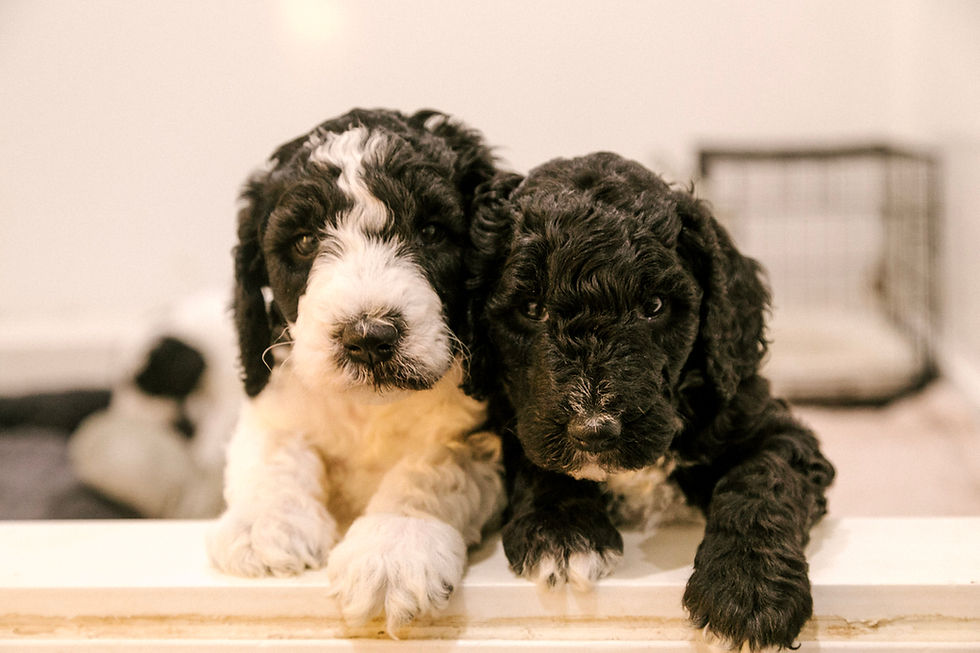
Charleston Doodle Breeders with Early Neurological Stimulation (ENS) and Puppy Culture Protocol

Updated: Aug 5
If you’re searching for Charleston, South Carolina doodle breeders, you’ve probably noticed something interesting.
A lot of websites talk about beautiful puppies, colors, sizes, and availability—but once you start digging deeper, you begin seeing terms like ENS, Early Neurological Stimulation, and Puppy Culture Protocol.
At first, those phrases can sound technical or even a little intimidating. But they’re actually talking about something pretty simple:
What happens during the first several weeks of a puppy’s life before they ever come home?

For many families, that part becomes increasingly important because they realize choosing a breeder isn’t only about choosing a puppy. It’s also about understanding how that puppy was raised during the earliest stages of development.
This guide will walk through what ENS and puppy culture programs are, why breeders use them, and what questions families should ask.
What Is Early Neurological Stimulation (ENS)?
Early Neurological Stimulation—often shortened to ENS—is a structured series of brief handling exercises introduced during a very early developmental period.
The idea behind ENS is not to train puppies or accelerate maturity.
Instead, the goal is to provide small, age-appropriate experiences during early development while puppies are still with their breeder.
Typically, ENS begins very early in life and consists of short exercises performed carefully and consistently.
Families sometimes hear about ENS and imagine intense training sessions, but that’s not really what it is. It’s more accurate to think of ENS as intentional early exposure.
Related posts:
Why Do Some Charleston Doodle Breeders Use ENS?
Many responsible breeder programs view early development as one piece of a much larger puzzle.
Puppies are constantly changing during their first several weeks, and breeders often use structured routines to support healthy experiences during that period.
Programs that incorporate ENS may do so because they value:
intentional handling
early human interaction
structured developmental routines
consistent puppy observation
thoughtful socialization practices
ENS isn’t magic. It doesn’t guarantee personality outcomes or eliminate future training needs.
But many breeders believe those early experiences are worth incorporating into their puppy program.
What Is Puppy Culture?
Puppy Culture is another term families commonly see while researching doodle breeders.
Unlike ENS, which focuses on very early developmental exercises, Puppy Culture is a broader puppy-raising framework.
It’s designed around introducing puppies to experiences during different stages of development in a structured and intentional way.
Programs that use Puppy Culture often emphasize areas like:
confidence building
age-appropriate enrichment
communication with humans
routine building
observation of individual personalities
Think of Puppy Culture less like a single activity and more like a philosophy around raising puppies.
How ENS and Puppy Culture Work Together
Families sometimes assume breeders choose either ENS or Puppy Culture. In reality, many programs use both.
ENS may happen during the earliest developmental stages, while Puppy Culture principles continue as puppies grow and become ready for more interaction.
That combination allows breeders to think intentionally about different phases of puppy development.
For example:
Stage | Example Focus |
Early days | Gentle handling and ENS |
Growing weeks | Environmental exposure |
Social periods | Confidence and routine building |
Pre-go-home | Observation and preparation |
The exact approach varies from breeder to breeder, but the overall goal is usually the same: creating thoughtful experiences rather than simply waiting for puppies to get older.

Why Families in Charleston Often Search for These Programs
Charleston has become an increasingly popular place for families looking for companion dogs.
There are growing families, retirees, apartment living, suburban neighborhoods, and active lifestyles all existing side by side.
Because of that, many families want more than simply finding a puppy that looks cute. They want to understand:
how puppies are raised
what experiences they receive
what support exists after adoption
That’s where conversations about ENS and Puppy Culture often start. Families begin realizing that what happens before pickup day matters too.
Related articles:
Does ENS Make Puppies Calmer?
This is a question that comes up a lot. The honest answer is: not directly.
Puppy personality develops from many factors including:
genetics
temperament
training
household routines
individual personality
ENS doesn’t create calm dogs. Puppy Culture doesn’t guarantee confidence.
What these systems often aim to do is create thoughtful opportunities for development during early life. Families still play a huge role after bringing their puppy home.
Questions to Ask Charleston, SC Doodle Breeders About ENS and Puppy Culture
Not every breeder who mentions these programs uses them in the same way.That’s why asking thoughtful questions can be helpful.
How do you introduce ENS?
Listen for explanations that sound intentional rather than scripted.
How do you apply Puppy Culture principles?
Look for examples of daily routines or experiences.
How do you evaluate puppy personalities?
Programs that spend time observing individual puppies often have more insight during matching.
What happens after puppies go home?
Good doodle breeders usually view transition support as part of the process.
Why Puppy Matching Often Connects to ENS and Puppy Culture
This is something families don’t always expect.
Programs that spend weeks handling, observing, and raising puppies often develop surprisingly detailed knowledge about personality differences.
Two doodle puppies may appear nearly identical but respond differently to:
stimulation
human interaction
activity levels
recovery from surprises
social situations
That information can become useful when helping match puppies to families.
Rather than choosing based entirely on appearance, some programs prefer matching based on lifestyle goals.
What Else Should Families Look For Beyond ENS?
ENS and Puppy Culture can be great conversation starters, but they shouldn’t be the only deciding factors.
Families may also want to ask about:
Area | Why It Matters |
Health testing | Understand long-term planning |
Socialization | Understand exposure |
Temperament evaluation | Understand fit |
Training foundations | Understand preparation |
Breeder communication | Understand support |
A breeder can mention all the right buzzwords and still not offer the experience your family wants. Looking at the bigger picture usually helps.
Why Some Families Travel for the Right Breeder
One trend that has become increasingly common is families expanding their search beyond immediate driving distance.
Rather than choosing the closest breeder, many families prioritize:
development philosophy
health practices
matching process
support systems
communication
That may mean local families work with out-of-state programs or arrange delivery options.
For some people, finding the right fit matters more than geography.
How Early Development Connects to Long-Term Success
One thing experienced breeders often see is that puppy raising doesn’t happen in isolated stages.
Early experiences connect to later experiences. Then later experiences connect to adolescence. Then adolescence connects to adulthood.
That doesn’t mean every puppy follows the same path. But it’s one reason many breeders spend so much time thinking about those early weeks.
They understand those weeks move fast.

Wrapping Up
What ENS & puppy culture often represent is something simple: a breeder who believes those early weeks matter and wants to be thoughtful about how puppies experience them.
Finding the right doodle breeder is about understanding the philosophy behind those choices and deciding whether that approach aligns with your family.
Because when families understand how puppies are raised—not just how they look—they often feel much more confident bringing their new companion home.
Authored by the JLDD Team. Learn more about what makes us premium puppy breeders here.